

After-Hours Calls: Count What You Miss, Then Answer Every One
Calls that come in at night and on weekends often go to voicemail. Here is a simple way to count what those missed calls cost and how an AI receptionist answers them.

Customers don't only call during office hours. A pipe bursts on a Saturday night, a patient has a toothache on Sunday morning, and a new lead fills in your web form at 10 PM. If nobody picks up, that caller may leave a message, or they may simply call the next business on the list. This guide shows how to count what after-hours calls are worth to you, what an AI receptionist does with them, and how to start without risk.
Why after-hours calls matter
The calls that come in after hours are often the urgent ones. People call at night because something went wrong, or because evenings and weekends are the only time they have to deal with it. Those callers are ready to book.
Voicemail doesn't book anything. It also puts the work back on your team the next morning: listening to messages, calling back and hoping the person still needs you.
Count what missed calls cost you
You don't need industry averages to see whether this matters. You need three numbers from your own business:
- Missed calls after hours per week. Your phone system's call log usually shows calls that rang out or went to voicemail. Count the ones outside your opening hours.
- The share that would have booked. Look at your daytime calls: out of every ten callers, how many become a booking? Use the same share for after-hours calls.
- Your average job or visit value. What one booking is worth to you, on average.
Multiply the three together and you get the revenue at risk each week. Multiply by 52 for the year.
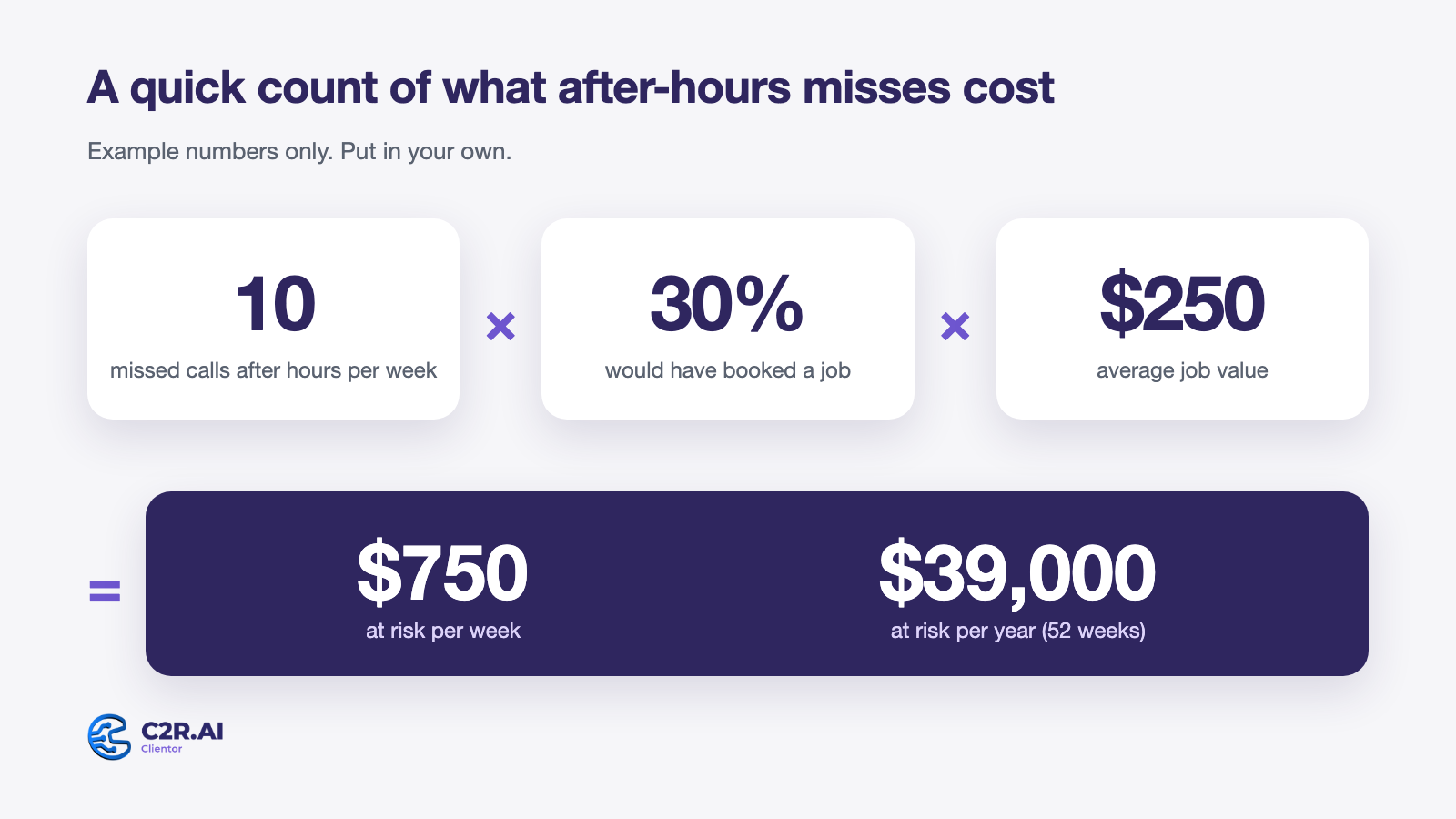
The numbers in the picture are only an example. Put in your own. If you want the math done for you, our ROI calculator works through the same steps.
What an AI receptionist does after hours
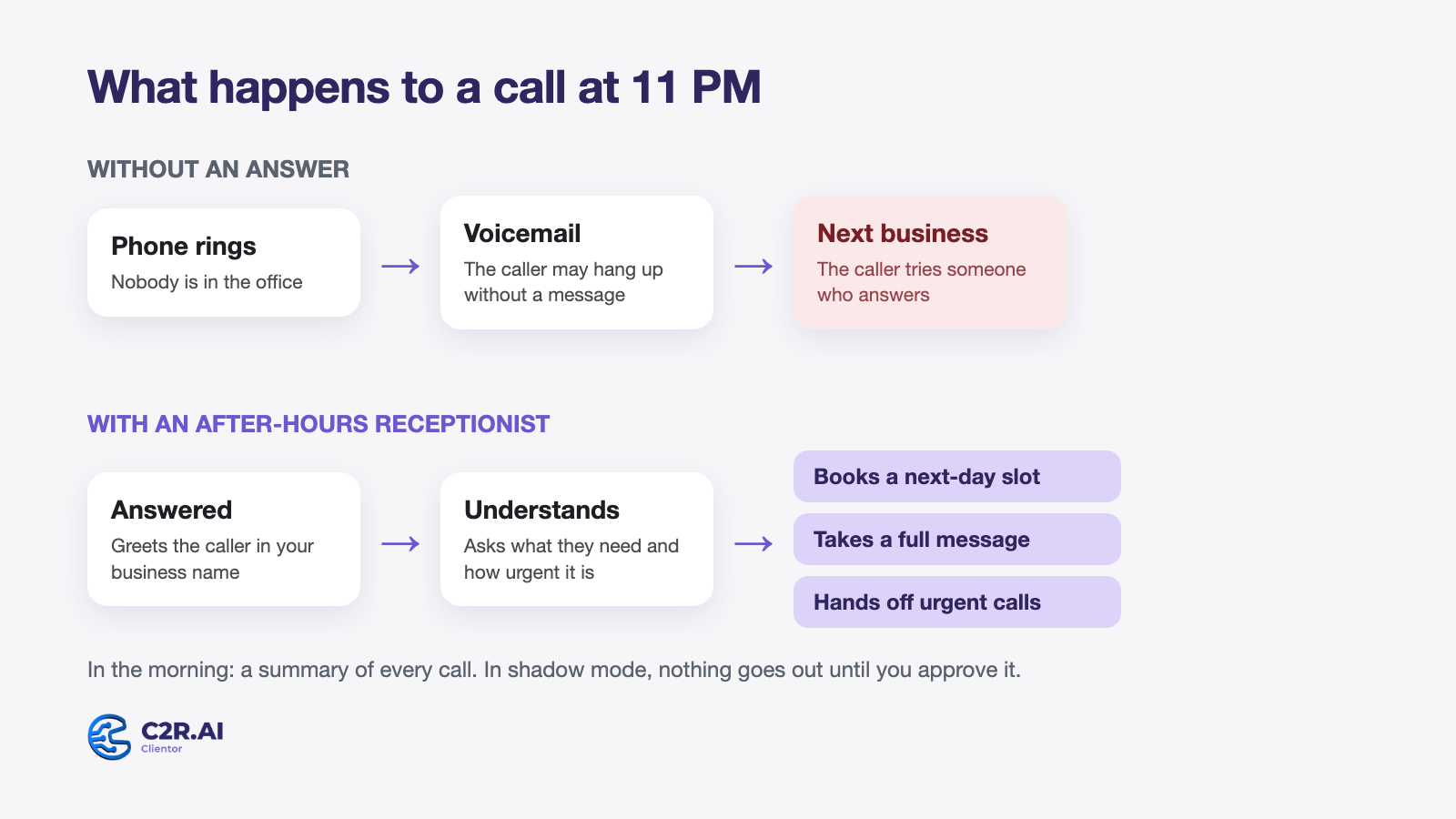
An after-hours receptionist answers nights and weekends in your business name. On each call it can:
- Book a next-day slot in your calendar, so the job is waiting for you in the morning.
- Take a full message with the caller's name, number and what they need, when booking isn't the right step.
- Hand off urgent calls to the person on call, when something can't wait until morning.
Every call is answered, recorded and summarised, so in the morning you read short summaries instead of digging through voicemail. The same agent can also cover texts, email and website chat, so a lead that arrives by web form at 10 PM gets a reply too.
Start safely with shadow mode
Handing your phone line to software can feel like a big step. You don't have to do it all at once. New agents start in shadow mode: they draft their replies and you approve each message until you trust them. When you are happy with how it handles your calls, you let it run on its own.
Most businesses are live the same day. You describe your business or paste your website, and the agents are set up from there.
A quick checklist before you choose
- Does it answer in your business name and follow your booking rules?
- Can it book straight into your calendar, not just take messages?
- Who gets the urgent calls, and how is that decided?
- Do you get a clear summary of every call?
- Can you review its messages before it runs on its own?
- What does it cost in a normal month and a busy one? Our guide on how much an AI receptionist costs covers the questions to ask.
Hear it for yourself
The fastest way to judge is to call one. Try the demo and hear how an AI receptionist handles an after-hours call, or see the plans on our pricing page.